
On 29 November 2025, the first public activity of Ars Lucis took place: a “stained-glass walk” in Ghent, during which we explored several little-known gems of stained-glass art. Interest was high, as the 30 available places were quickly taken.
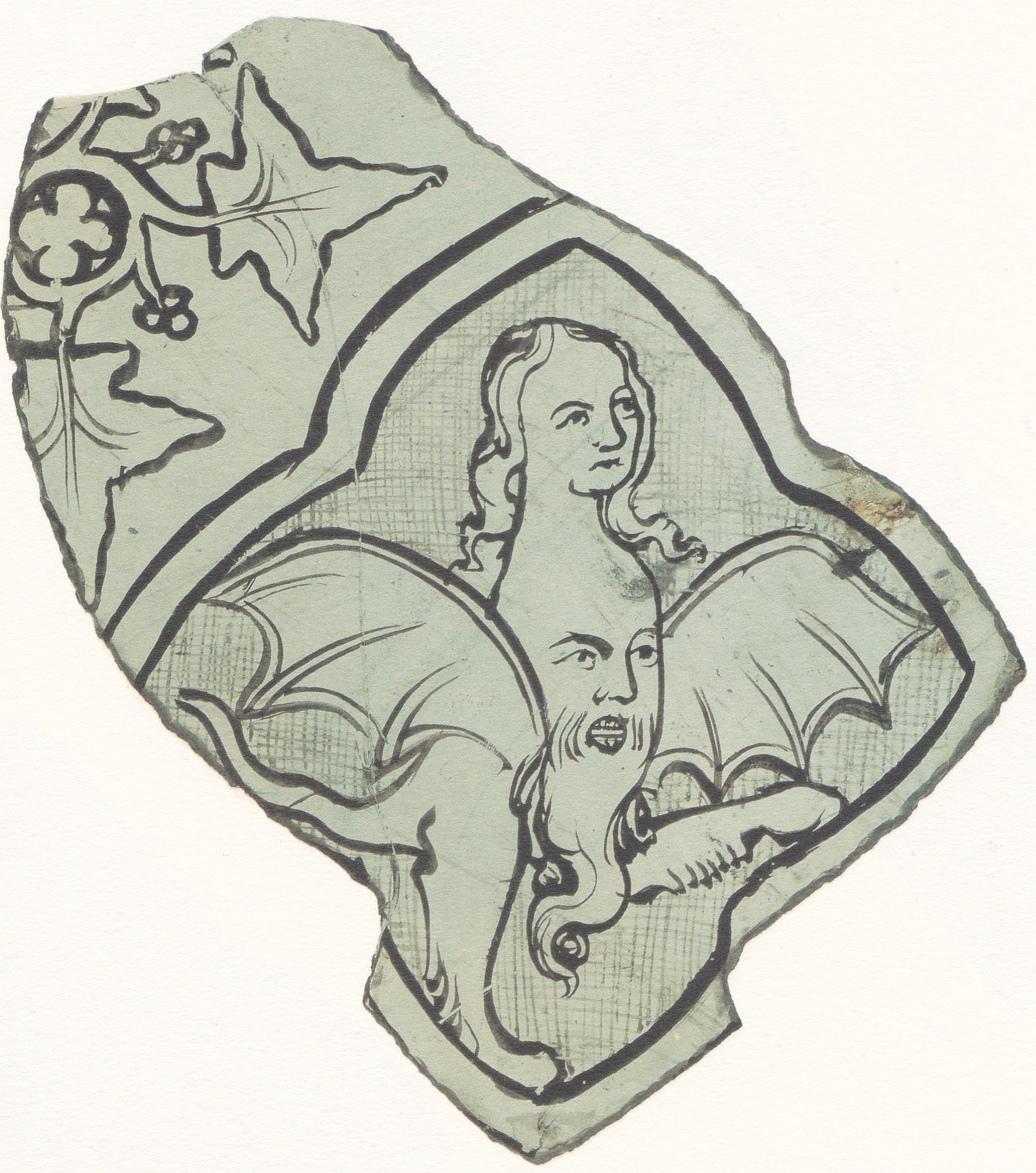
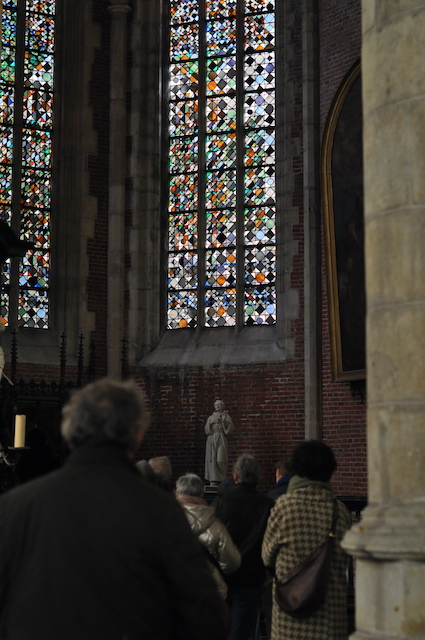
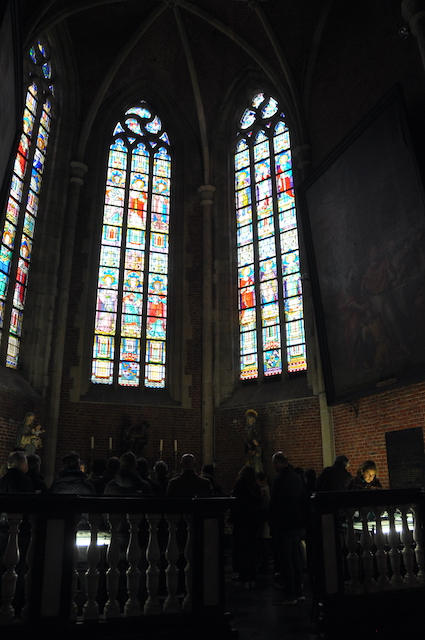
We began our walk at St Michael’s Church, where since September 2025 part of the archaeological glass finds from the adjacent former Dominican monastery has been on display. The approximately 4,500 glass fragments (dating from the 14th, 15th and 16th centuries) were discovered in 1982 during renovation works in the cloister and most likely originate from the monastic church. The imagery on the glass pieces is highly varied and includes, alongside heraldic elements, a range of beautiful drolleries. Following an explanation of the discovery and significance of these glass fragments, we turned our attention to St Michael’s Church itself, which houses noteworthy stained-glass windows from the 19th and 20th centuries. A brief introduction was therefore indispensable. In particular, the contrast between the 19th-century windows in an ‘archaeological’ style (e.g. A. Verhaegen) and those in an ‘aesthetic-academic’ style (J. B. Capronnier) attracted considerable interest. Moreover, the stained-glass windows by Michel Martens, featuring an early application of mirrored glass in stained glass, proved to be a revelation for our participants.
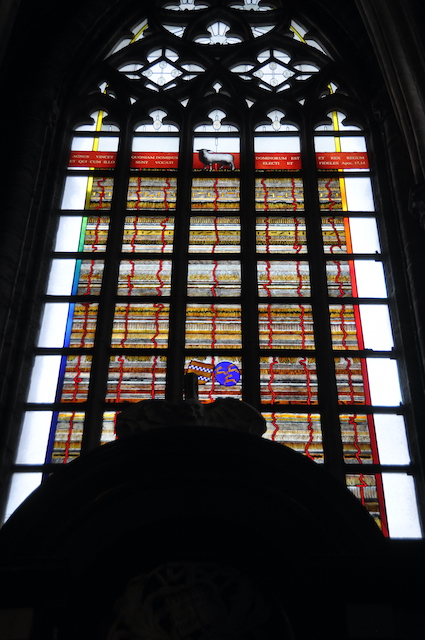
We then proceeded to St Bavo’s Cathedral, where we first paused to examine a series of heraldic panels from the 16th century. These are the only surviving stained-glass windows from that period in the cathedral. Not only the story of their creation, but especially the details of their recent conservation and restoration treatment received particular attention. After this, we moved on to the 19th-century windows and their stylistic evolution. The 20th century was also represented through the works of Michel Martens and Herman Blondeel. Each in their own way, these master craftsmen demonstrated that they perfectly knew how to keep the centuries-old art of stained glass vibrantly alive.
We concluded the stained-glass walk with a pleasant and convivial reception, kindly offered by the Diocese of Ghent, in the presence of Bishop Lode Van Hecke and Canon Ludo Collin. As the icing on the cake, we were also shown a magnificent *vidimus* (a scale design for a stained-glass window) from the Casier workshop.
In short, within a short space of time we were able to enjoy so many remarkable treasures of stained-glass art, and the enthusiasm of the participants spoke for itself!